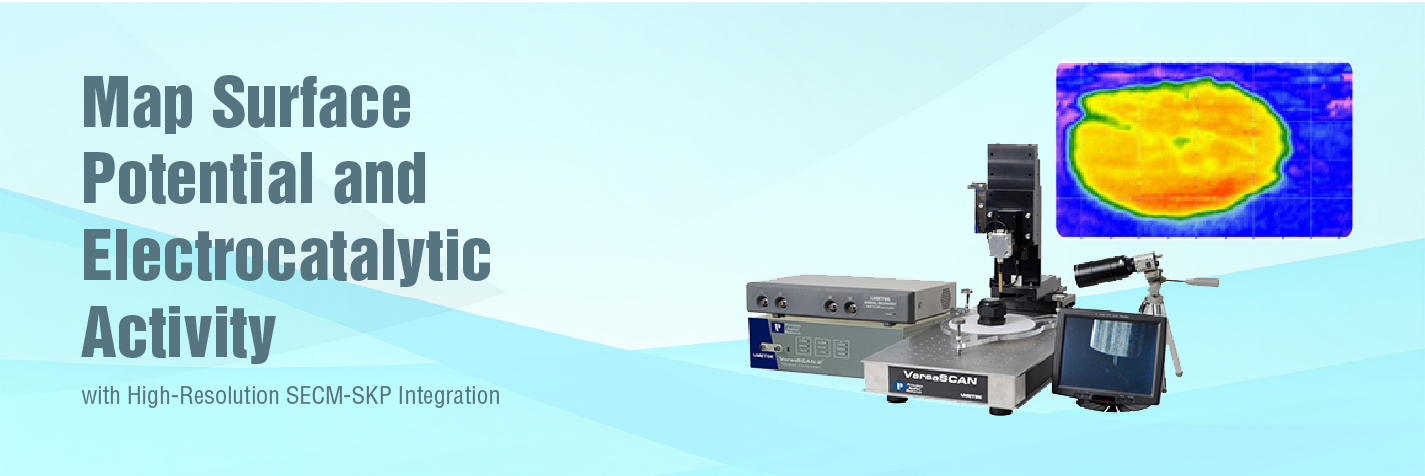
Map Surface Potential and Electrocatalytic Activity with High-Resolution SECM-SKP Integration
Precise electrocatalytic characterization techniques are critical for optimizing noble metal electrocatalysts used in hydrogen energy and fuel cell systems. Traditional methods often lack the spatial resolution to correlate work function, surface potential and electrocatalytic activity key parameters for understanding and improving catalyst performance at the microscale.
This application note explores how integrating Scanning Kelvin Probe (SKP) with Scanning Electrochemical Microscopy (SECM) enables electrochemists and materials scientists to map local variations in electrocatalytic activity, measure surface potential and study degradation mechanisms, all in a single experiment.
Key Benefits of SECM-SKP Integration in Electrocatalytic Characterization of Noble Metals
This dual-mode imaging technique offers researchers and developers deeper insight into the performance and behavior of noble metal electrocatalysts through:
- Surface Potential Mapping: SKP quantifies local work function differences.
- Electrocatalytic Activity Mapping: SECM visualizes HER/HOR kinetics on alloy surfaces.
- Work Function and Reactivity Correlation: Identify trends across crystalline and amorphous structures.
- Advanced Electrochemical Imaging Techniques: Characterize non-uniform degradation and catalyst distribution.
- Versatile Application: Ideal for PEM fuel cell studies, hydrogen electrocatalysis, and alloy optimization.
Ready to explore more?
Download the Application Note now