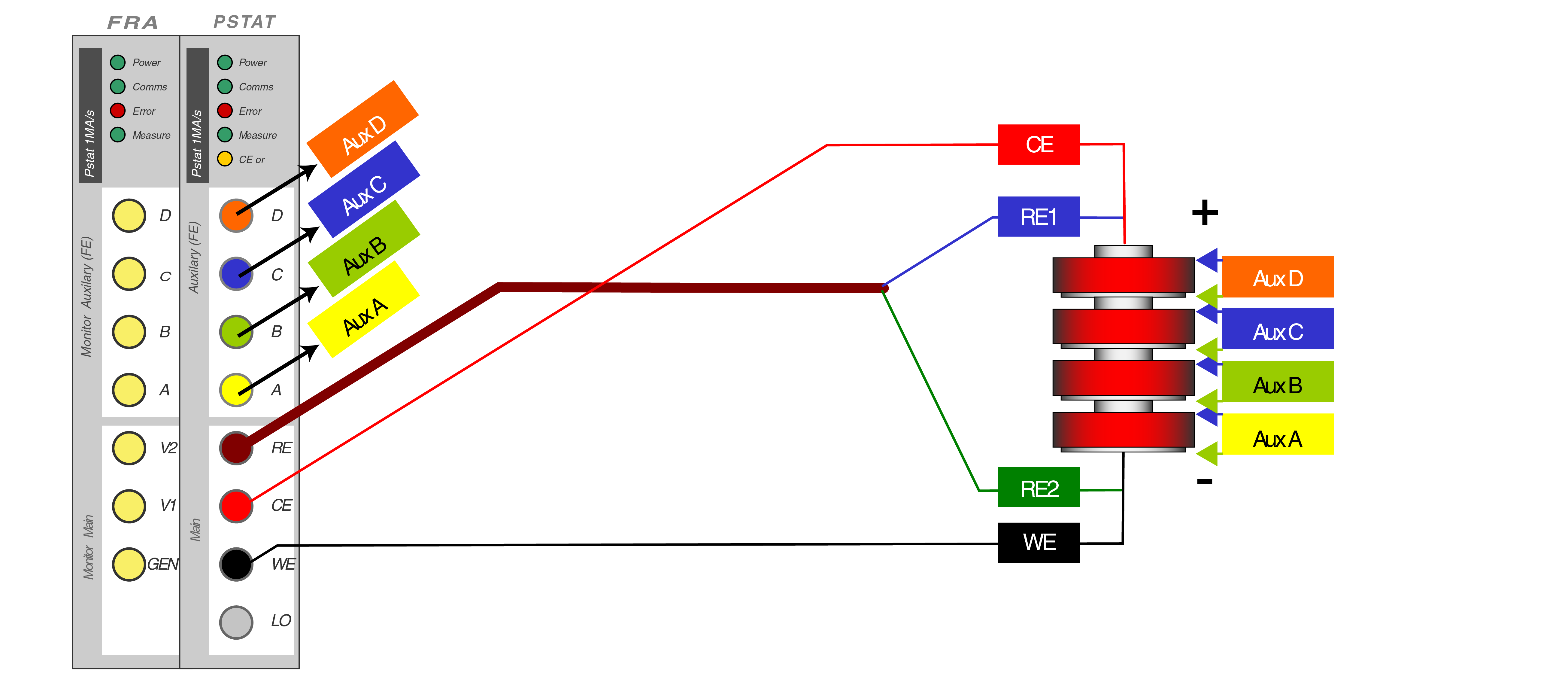
As energy storage systems become more complex, ensuring battery and fuel cell reliability is crucial. These systems are built from multiple interconnected cells, making it difficult to identify individual cell failures using conventional diagnostic methods. Traditional impedance measurements only assess the total stack impedance, providing no insight into the performance of specific cells. These inaccuracies often lead to incorrect failure diagnoses, unnecessary system disassembly and increased maintenance costs.
Failures such as catalyst poisoning, electrode degradation or membrane hydration issues often go undetected until they significantly impact system performance. So, engineers and researchers require a more precise, real-time and non-invasive solution to identify failure mechanisms and optimize system reliability.
How EIS Cell Analysis Techniques Transforms Battery Diagnostics?
Electrochemical Impedance Spectroscopy (EIS), combined with auxiliary voltage measurements, offers a breakthrough approach to cell-by-cell analysis within a stack. Instead of providing only a single impedance value for the entire system, EIS enables individual anode, cathode and cell impedance measurements. This provides researchers and engineers with detailed insights into each component’s performance without the need for physical disassembly.
The Solartron ModuLab System with auxiliary voltage measurement capabilities enables:
- Monitoring of impedance and DC voltage for each cell
- Detection of failure mechanisms non-invasively (e.g., catalyst degradation, separator failure ion transport issues)
- High voltage tests up to 100V for thorough stack analysis
- Scaling measurements with multiplexers, covering multiple cells beyond four auxiliary channels
Revolutionize battery and fuel cell diagnostics with EIS Cell Analysis
Download the application note