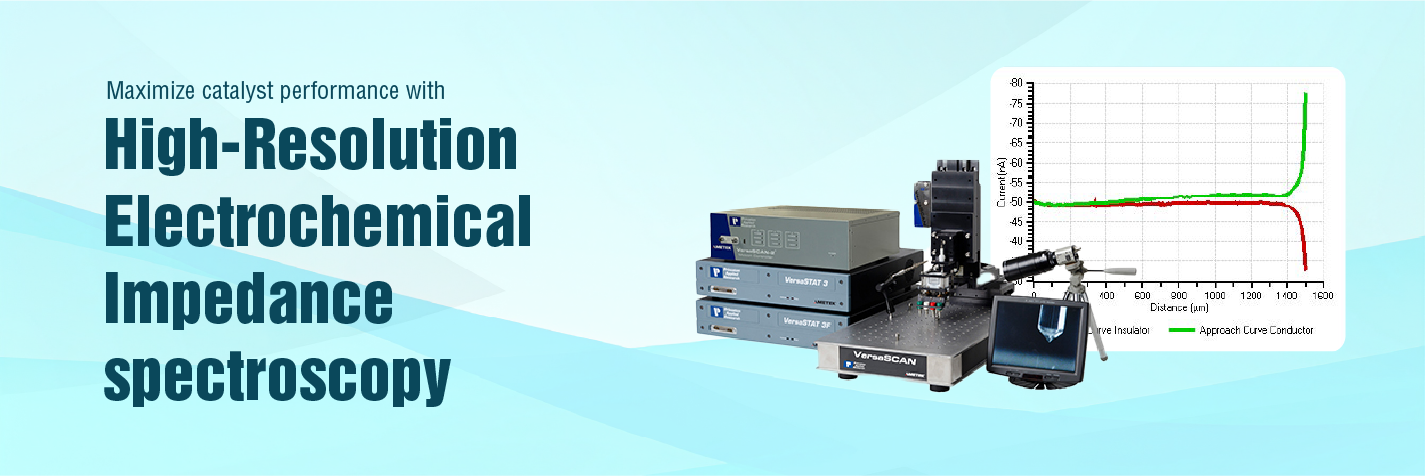
Maximize catalyst performance with high-resolution electrochemical impedance spectroscopy
Unlock the full potential of your hydrogen research with advanced electrochemical techniques. PAR and Solartron Analytical systems enable you to go beyond basic voltammetry, delivering deeper insights through CV, EIS and Tafel analysis. Ensure accurate, reproducible results and accelerate innovation in water splitting with tools trusted by clean energy pioneers worldwide.
Key Advantages of Advanced Electrochemical Testing in Water Splitting Research
This application note is designed for electrochemists, catalyst developers, and clean energy researchers aiming to accelerate innovation in hydrogen generation through precise electrochemical testing. Key benefits include:
- Measure Catalyst Activity with CV & LSV: Clearly evaluate redox properties and onset potentials.
- Kinetic Insights with Tafel Plot: Identify rate-limiting steps and reaction mechanisms.
- EIS Data: Measure charge transfer resistance and double-layer capacitance.
- Durability Testing with Chronoamperometry: Evaluate long-term stability and reliability.
- Surface Reactivity Mapping with SECM: Visualize electrochemical behavior using VersaSCAN.
Ready to enhance your hydrogen research?
Download the Application Note now